
BizBash
The problem
In 2018, augmented reality was having a moment. ARKit had just launched, and suddenly AR felt possible outside of research labs and gaming — brands wanted in, but almost nobody knew what "good" looked like yet. I was brought on by a startup out of California to help design AR experiences and provide AR consultation, and one of the clients that came through was BizBash, a large events and magazine company. They wanted their 2018 Fall edition to come alive — readers holding up their phones to a printed page and having something happen.
There wasn't a playbook for this. I had to build one.
The approach
I started where I always start: research. Competitive analysis, a design brief, and enough conversations with the client to understand what they actually wanted versus what they thought AR meant. Then I looked at whatever interface guidelines and best practices existed at the time, thin as they were in 2018.
The part I keep coming back to is where I chose to prototype next: paper, not screens. In AR, people interact with things that are virtually placed in their physical space, and they interact with them physically — reaching, turning, moving their phone like a window into a space that isn't really there. If I wanted to design that well, I needed to think in physical space first, not jump straight to a screen and hope the metaphor held up. So I started with paper prototypes, working out how someone would actually hold a magazine, angle a phone, and expect something to happen.
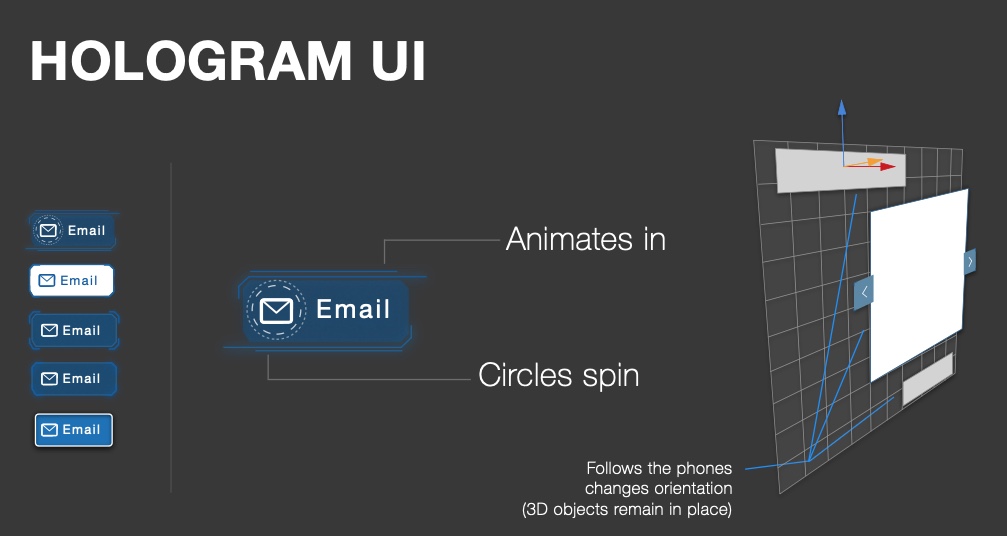
From there I moved into Sketch and InVision for assets, and Keynote for prototyping the interaction flow. I tested with users, and one decision came directly out of that testing: the experience needed to start scanning automatically, with no button to tap. An invisible watermark on the page triggered it. It sounds like a small detail, but it removed the one moment where someone might get confused about what to do — and confusion is the fastest way to lose someone in an AR experience.
I worked with developers to bring it to life, got the client's approval, and we moved into full development.
What shipped
The app launched on the App Store and ran on BizBash's 2018 Fall edition. It went from an idea, through paper, through digital prototypes, through testing, to something people actually held up to a real magazine and used.
What I learned
Working in AR taught me that the technology is never really the hard part — understanding how people expect to move through physical space is. Before any development starts, I need to understand three things at once: the space itself, the way people's mental models carry over from the physical world into an experience that's only partly real, and what the client actually expects to see. Skipping any one of those is how you end up with an AR experience that's technically impressive and practically confusing. BizBash was one of the projects that taught me to slow down and prototype in the real world before I ever touch a screen.
Want to know more? let's chat