wols
The problem
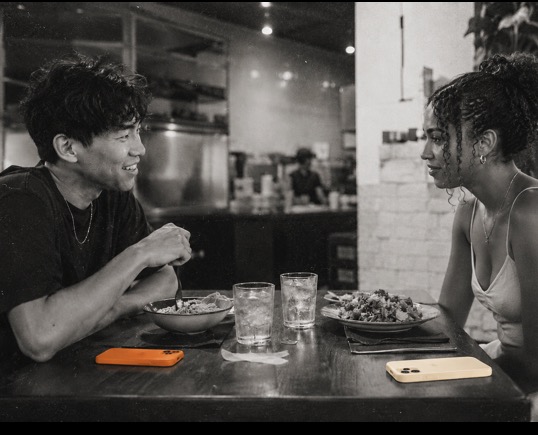
I was out to eat with my wife and looked around — everyone was buried in their phones. Together, but distant. That stuck with me, so I went home and started researching. What I found surprised me: phones weren't just changing how we socialize — most people I talked to knew the behavior was unpleasant, on both ends, and still couldn't help it. Even more surprising was the business impact. It was hitting restaurants' bottom line and their customers' experience. This wasn't a one-sided problem — it touched everyone at the table, and the business hosting it.
The approach
Our hypothesis: most people won't put the phone away — they're too attached to it. But if the phone was the thing changing how people behaved at the table, we figured it could also be the thing that changed it back. Instead of going phone-free, we'd use the phone itself — multi-sensory feedback, an "other-first" mindset, and financial incentives — to shift the norm. As with every project I run, the approach stayed lean, fast, and resourceful.
Feedback loops, AI & business models
A round of quick interviews and testing made one thing clear: users needed control over their own experience, with the flexibility to adjust it to fit them. The feedback mechanism relied on multi-sensory cues — haptic vibration for touch, flash/brightness for sight, an audio alert for sound — to nudge users to put their phone back down, whether they'd picked it up consciously or out of habit. Context, location, and accessibility all mattered more than I expected: some people wanted every feedback mechanism running, others wanted just a couple, and some wanted only the one that actually worked for them. It's a short feedback loop, built on a reinforcement model, and one that still needs more research.
Our brand voice asks people to slow down — wols is "slow" spelled backwards — and enjoy the moment with the person across the table. It's not a "do better" or "you need this" pitch. It's a tool in service of connection, built around people's natural desire to enjoy each other's company. That's where AI comes in.
Use of AI
AI comes in after the conversation, not during it. It acts as a second brain and a social coach — remembering the things worth bringing up again, and coaching you on how to listen better, ask better questions, and generally show up with more emotional intelligence. We deliberately didn't build a "record the conversation, get a summary" feature. That felt too disconnected — it let the AI do all the listening and retaining for you, instead of you.
We wanted the interaction to map onto something people already do naturally. We call it debrief mode: the habit of recapping a coffee, lunch, or catch-up with a friend or family member afterward. The AI doesn't replace that human debrief — it augments it, arming you with something useful for the next conversation with the person you just spent time with.
Crafting a business model
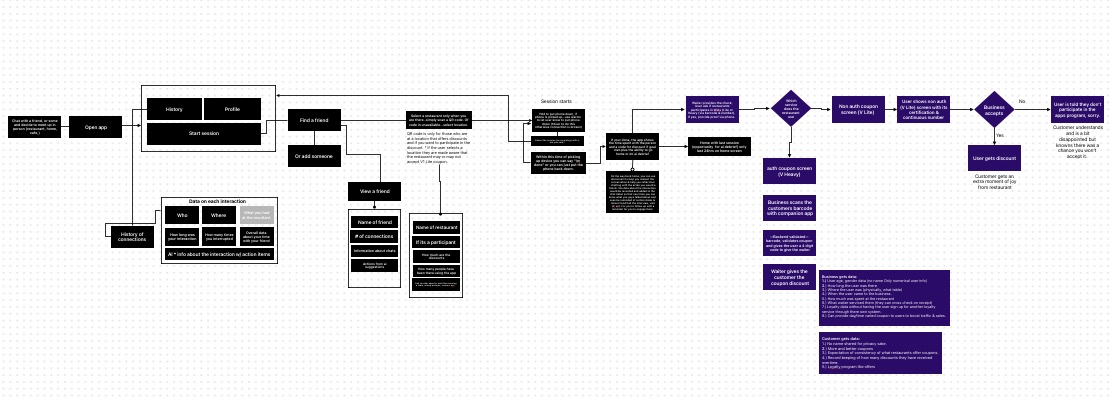
We knew from the start there was a business model here — we just didn't know what it looked like yet. Research turned up restaurants already posting "no phones" signs, even offering discounts for putting phones in a box, bin, or jar at the table. Digging further, I found the threat to a business's bottom line came down to three specific effects of phone use. So we built a paid program that addresses those three issues directly.
But we also knew plenty of businesses would want something with less commitment, less setup, and less cost than the paid tier — so we built a "lite" version. It was one of the hardest things to design well, and one of the most satisfying, knowing it would help both the business and their customers.